ORÉMUS
Orémus is a collection of Catholic prayers, offering English, Latin, German, and Latin versions.
Embark on a Catholic journey with Orémus, starting with Psalmus 148, Magnificat, Cánticum Zacharíæ, proceeding with Te Deum, Ven Creátor Spíritus, and closing with Ave Maris Stella.
This collection of prayers includes inspiring images of religious art, architecture, and sculpture, along with descriptions. The visuals lift the reader's spirit while learning about Catholic prayer and culture dating back to the Old Testament.
Index
Psalmus 148
Magníficat
Cánticum Zacharíæ
Te Deum
Ven Creátor Spíritus
Ave Maris Stella
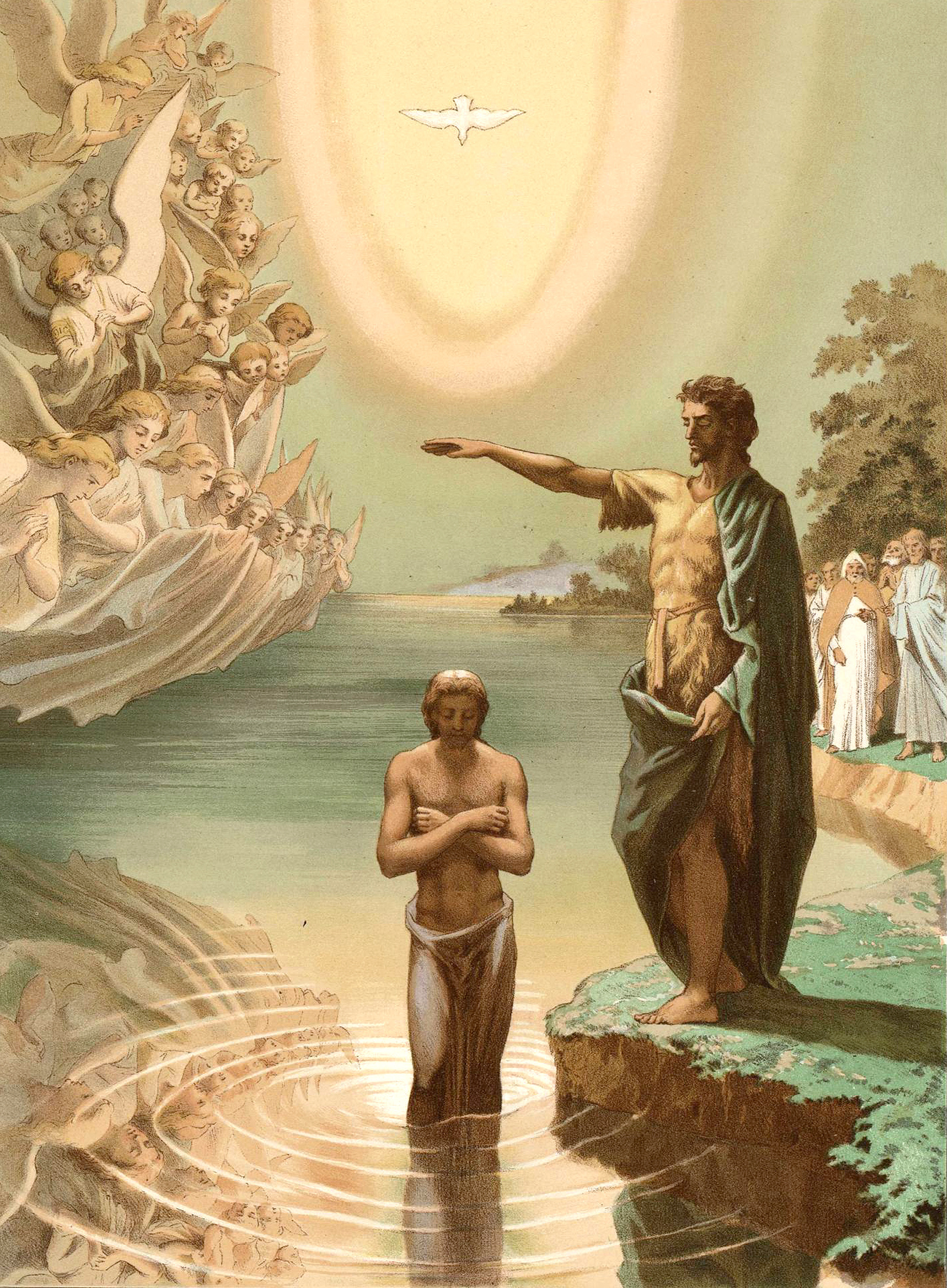
Matthew 3:16-17
16 After Jesus was baptized, he came up from the water, and behold, the heavens were opened, and he saw the Spirit of God descending like a dove coming upon him. 17 And a voice came from the heavens, saying, “This is my beloved Son, with whom I am well pleased.”
Psalms 148. Praise Ye The Lord
Praise ye the Lord from the heavens * praise ye him in the high places.
Praise ye him, all his angels: * praise ye him, all his hosts.
Praise ye him, O sun and moon: * praise him, all ye stars and light.
Praise him, ye heavens of heavens: * and let all the waters that are above the heavens praise the name of the Lord.
For he spoke, and they were made: * he commanded, and they were created.
He hath established them for ever, and for ages of ages: * he hath made a decree, and it shall not pass away.
Praise the Lord from the earth, * ye dragons, and all ye deeps:
Fire, hail, snow, ice, story winds * which fulfill his word:
Mountains and hills, * fruitful trees and cedars:
Beasts and all cattle: * serpents and feathered fowls:
Kings of the earth and all people: * princes and all judges of the earth:
Young men and maidens: * let the old with the younger, praise the name of the Lord: For his name alone is exalted.
The praise of him is above heaven and earth: * and he hath exalted the horn of his people.
A hymn to all his saints: to the children of Israel, a people approaching him.
Glory be.
Psalmus 148. Laudáte Dóminum.
Laudáte Dóminum de Caelis: * laudáte eum in excélsis.
Laudáte eum, omnes Angeli ejus: * laudáte eum, omnes virtútes ejus.
Laudáte eum, sol et luna: * laudáte eum, omnes stellae et lumen.
Laudáte eum caeli caelórum: * et atquae omnes, quae super caelos sunt, laudent nomen Dómini.
Quia ipse dixit, et facta sunt: * ipse mandávit, et creáta sunt.
Státuit ea in aetérnum, et in sáeculum sáeculi: * praecéptum pósuit, et non praeteríbit.
Laudáte Dóminum de terra, * dracónes, et omnes abyssi.
Ignis, grando, nix, glácies, spíritus procellárum: * quae fáciunt verbum ejus:
Montes, et omnes colles: * ligna fructífera, et omnes cedri.
Béstiae, et univérsa pécora: * serpentes, et vólucres penátae:
Reges terrae, et omnes pópuli: * príncipes, et omnes júdices terrae.
Júvenes, et vírgines: senes cum junióribus laudent nomen Dómini: quia exaltátum est nomen ejus solíus.
Conféssio ejus super caelum et terram: * et exaltávit cornu pópuli sui.
Hymnus ómnibus santis ejus: * fíiliis Istaël, pópulo appropinquánti sibi.
Glória Patri.
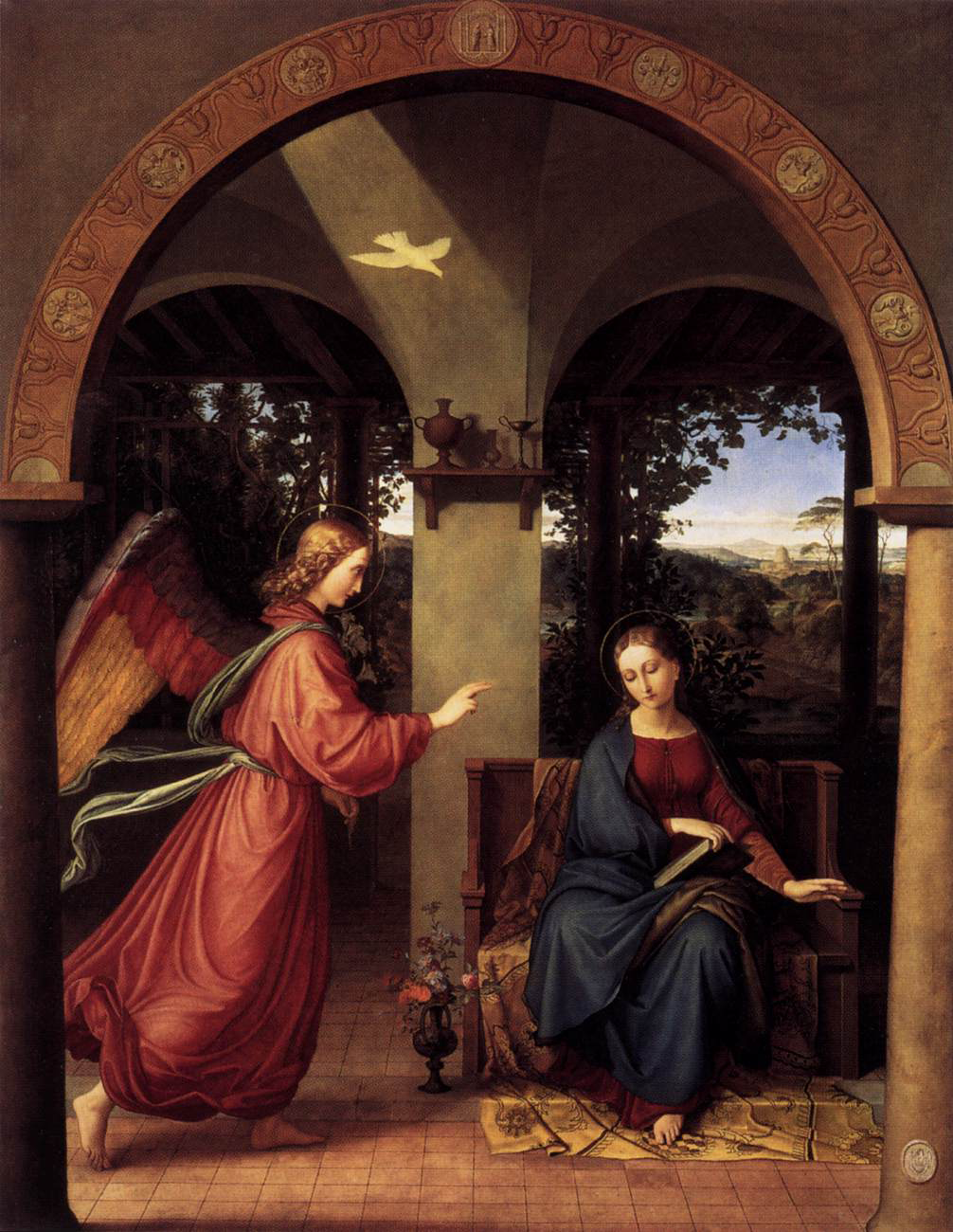
Our Blessed Mother
Luke 1:38 Mary said, “Behold, I am the handmaid of the Lord. May it be done to me according to your word.” Then, the angel departed from her.
Annunciation by Julius Schnorr von Carolsfeld, 1818, oil on canvas, 120 cm by 92 cm, resides in the Alte Nationalgalerie in Berlin, Germany.
Canticle Of Mary
My soul glorifies the Lord,
and my spirit has rejoiced in God, my savior,
because he has paid attention to the humility of his handmaid.
For behold, from now all generations will call me blessed,
because he who is mighty has done great things for me, and
holy is his name, and his mercy belongs to those who fear him,
form generation to generation.
He has shown might in his arm; he has scattered the proud in
the thoughts of their hearts.
He has thrust the powerful from their seats and exalted the humble.
The hungry he has filled with good things, and the rich he has
sent away empty.
He has raised up Israel his servant, remembering his mercy, and
he spoke to our fathers, to Abraham and his seed forever.
Amen.
Magníficat
Magníficat ánima mea Dóminum,
Et exultávit spíitus meus in Deo salutári meo,
Quia respéxit humilitátem ancíllae suae.
Ecce enim ex hoc beátam me dicent omnes generatiónes,
Quia fécit mihi mágna qui pótens est, et sánctum nómen eius.
Et misericórdia eius in progénies et progénies timéntibus eum.
Fécit poténtiam in bráchio suo; dispérsit supérbos mente cordis sui.
Depósuit poténtes de sede et exaltávit húmiles.
Ensuriéntes implévit bonis, et dívites dimísit inánes.
Suscépit Ísrael púerum suum, recordátus misericórdiae suae.
Sicut locútus est ad patres nostros, Ábraham, et sémini eius in saécula.
Amen.
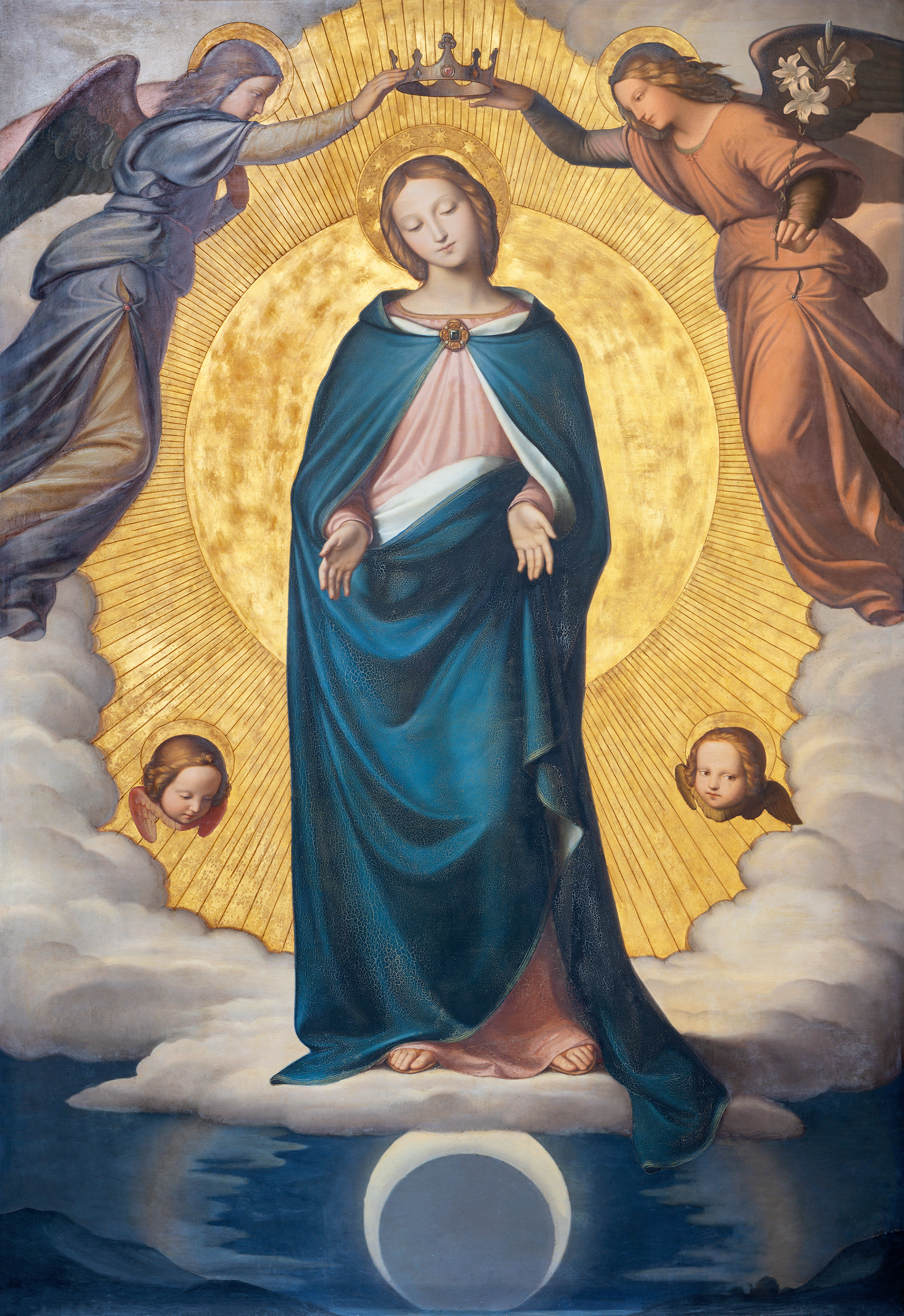
The Immaculate Conception
This image of the Immaculate Conception, an oil on canvas painting 2.20 meters wide by 3.33 meters tall, was produced by German Romantic painter Philipp Veit in 1830, a Catholic man and one of the leading exponents of the Nazarene Movement of 19th-century Vienna, born in February 1793 he completed the Immaculate Conception at age 37. Philipp Veit died in 1877 at age 84.
Veit's collection of paintings, including the Immaculate Conception, is a testament to his exquisite representations of storytelling, color, and proportion. Elements that contribute to a distinguished consonance, true to Veit, that accurately revives spirituality in art, engaging viewers with the storytelling aspect of his pieces.
The Immaculate Conception belongs to the art collection of The Church of Santissima Trinità dei Monti, La Trinité-des-Monts. This Roman Catholic late Renaissance titular church is part of a monastery complex in Rome positioned above the Spanish Steps, leading to the Piazza di Spagna. It is renowned for its rich collection of religious art, including Veit's Immaculate Conception.
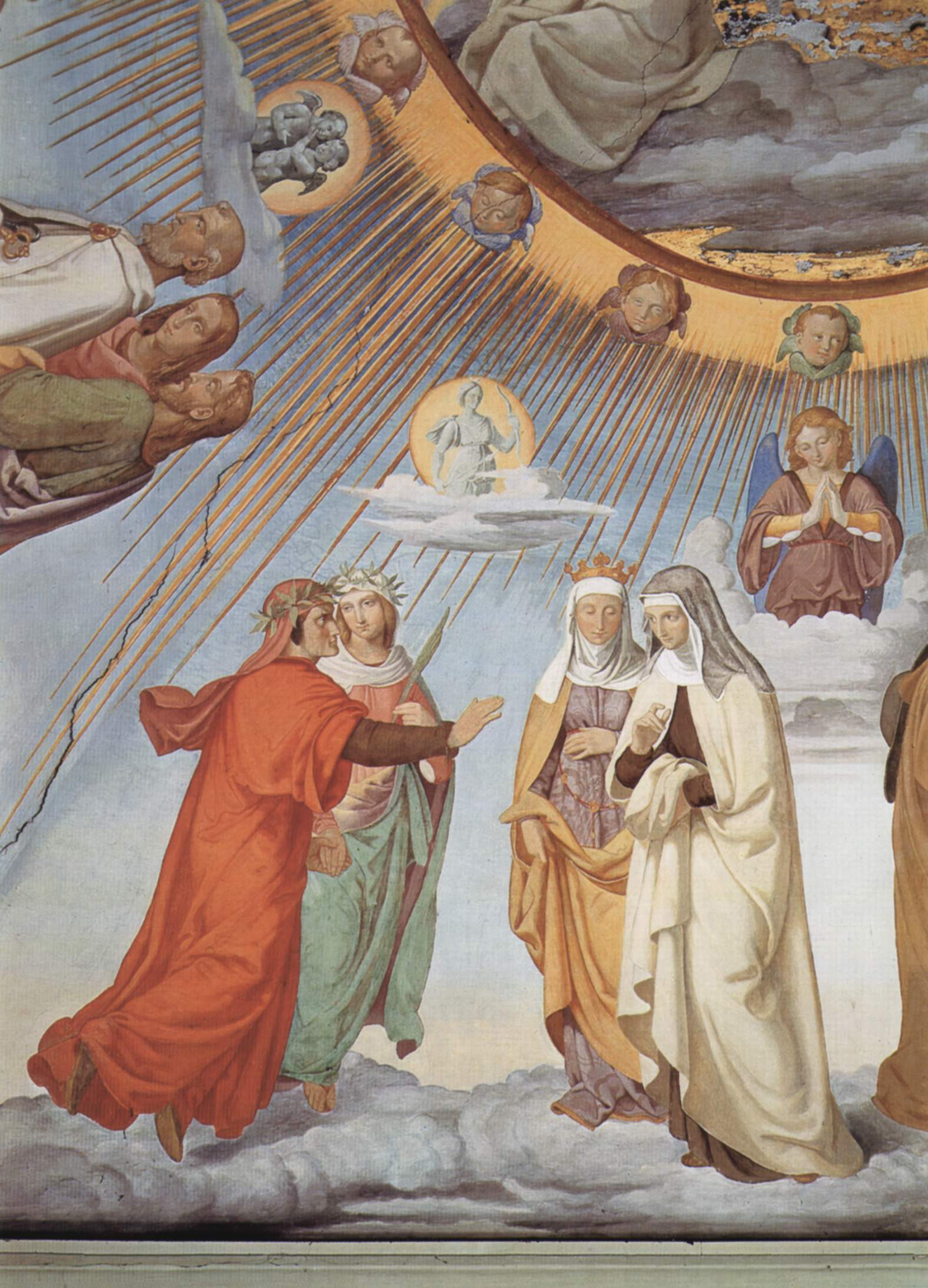
The fresco to the left is in Rome's Casino Massimo Lancelotti. It depicts Dante and Beatrice speaking to Piccarda and Constance of Sicily in Canto III of The Divine Comedy, painted by German painter Philipp Veit from 1817 to 1827.
What was the Nazarene Movement of 19th-century Vienna?
The Nazarene Movement, a German art society and brotherhood from 1809 to 1829, was dedicated to the return to the medieval spirit of art. This brotherhood of artists, including Philipp Veit, Julius Schnorr von Carolsfeld, Johann Friedrich Overbeck, Peter von Cornelius, and Spanish painter Manuel Vilar, reacted against the Neoclacism of the 18th century, holding on to the belief that art should serve a moral or religious purpose.
The movement, committed to their artistic principles, rejected the more modern modalities of up-and-rising European art academies and supported the more intimate classrooms of the medieval workshop, working and living together in semi-monastic company. These painters admired artists of the late Middle Ages and early Renaissance, believing that a lack of observation on religious narrative abandoned the most virtuous religious ideals to favor artistic virtuosity.
With its deeply felt Christian ideals, the Nazarene Movement created the first effective antiacademic movement in European painting. This authentic expression of their beliefs had a lasting impact, generating a positive gravitas on subsequent art movements, like the English Pre-Raphalites of the middle 19th century.
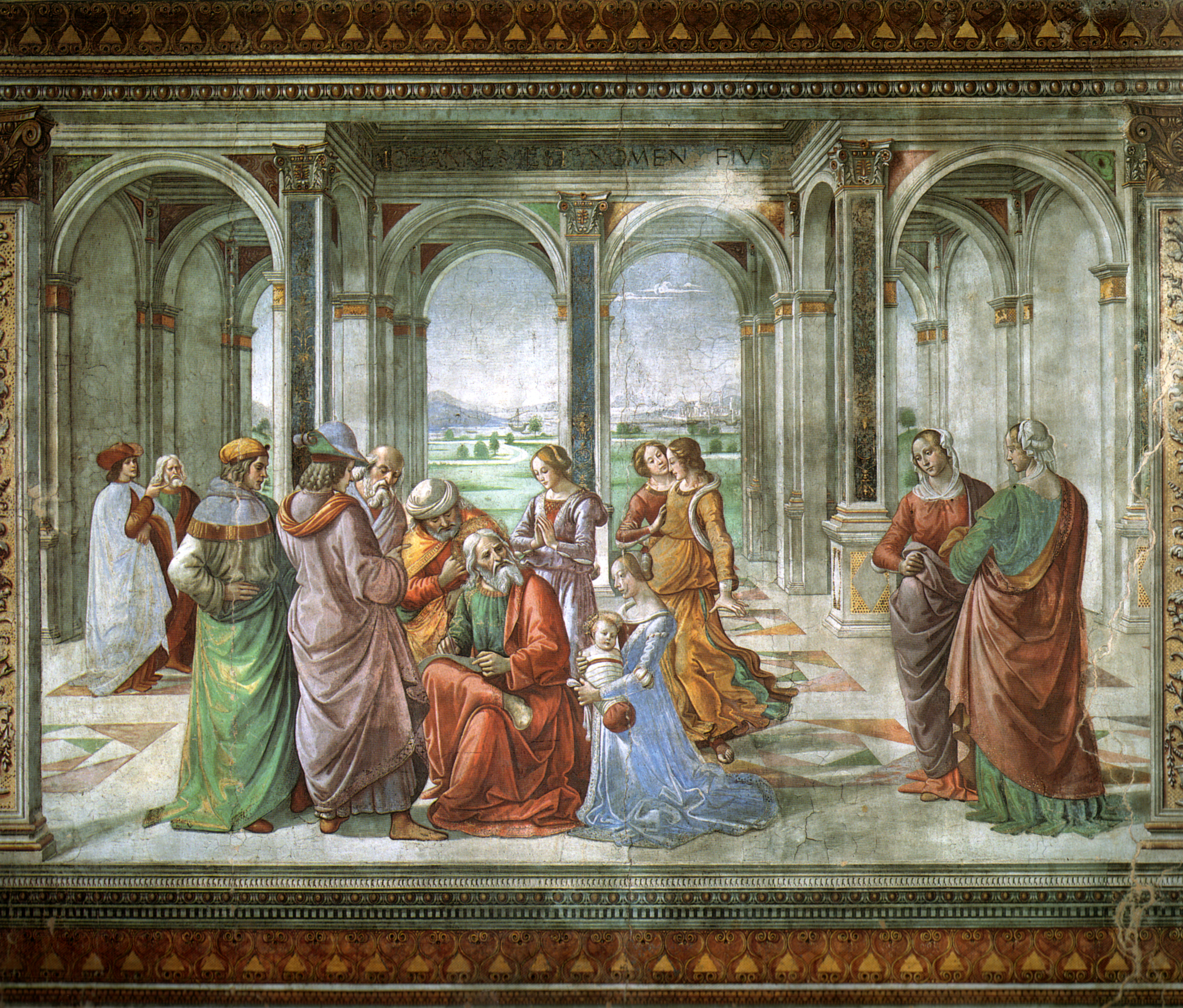
The image to the right, Imposizione Del Nome Al Battista, is a fresco in the chancel of the Roman Catholic Church Santa Maria Novella in Florence, Italy. Created by Domenico Ghirlandaio between 1485 and 1490.
Canticle Of Zechariah
Blessed be the Lord God of Israel, * because he hath visited and wrought the redemption of his people:
And hath raised up a horn of salvation to us, * in the house of David, his servant: As he spoke by the mouth of his holy Prophets, * who are from the beginning: Salvation from our enemies, * and from the hand of all that hate us:
To perform mercy to our fathers, * and to remember his holy testament, The oath, which he swore to Abraham our father, * that he would grant to us, That being delivered from the hand of our enemies, * we may serve him without fear, In holiness and justice before him, * all our days.
And thou, child, shalt be called the prophet of the Most High: * for thou shalt go before the face of the Lord to prepare his ways: To give knowledge of salvation to his people, * unto the remission of their sins:
Through the bowels of the mercy of our God, * in which the Orient from on high hath visited us:
To enlighten them that sit in darkness, and in the shadow of death: * to direct our feet into the way of peace.
Glory be.
Cánticum Zacharíæ
Benedíctus Dóminus, Deus Israël: * quia vistávit, et fecit redemptiónem plebis suæ:
Et eréxit cornu salútis nobis: * in domo David, púeri sui. Sicut locútus est per os sanctórum, * qui a saéculo sunt, prophetárum ejus:
Salútem ex inimícis nostris, * et de manu óminum, qui odérunt nos. Ad faciéndam misericórdiam cum pátribus nostris: * et memorári testaménti sui sancti.
Jesjurándum, quod jurávit as Abraham patrem nostrum, * datúrum se nobis: Ut sine timóre, de manu inimicórum nostrórum liberáti, * serviámus illi. In sanctitáte, et justítia coram ipso, * ómnibis diébus nostris.
Et tu, puer, Prophéta Altísimi vocáberis: præíbis enim ante fáciem Dómini, paráre vias ejus:
Ad dandam sciéntiam salútis plebi ejus: * in remisiónem peccatórum eórum: Per viscera misericórdiæ Dei nostri: * in quibus visitávit nos, óriens ex alto:
Illumináre his, qui in ténebris, et in umbra mortis sedent: * ad dirigéndos pedes nostros in viam pacis.
Glória Patri.
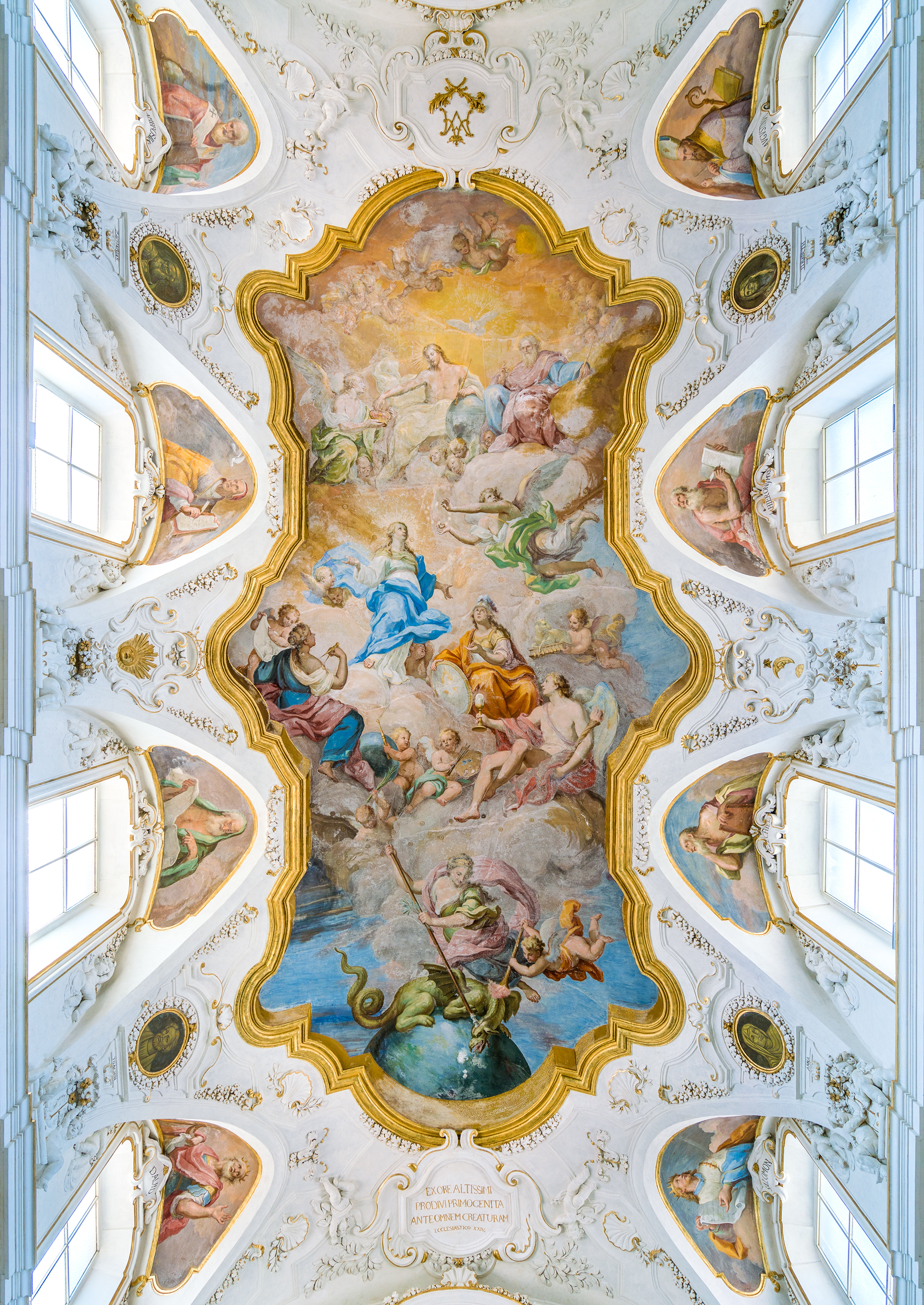
This frescoed vault is within the oratory of Chiesa Del Gesú Di Casa Professa in Palermo, Sicily. Chiesa Del Gesú Di Casa Professa was the first church the Jesuits built on site between 1564 and 1578. The church was extensively restored after World War II, and the interior of the oratory was redecorated in the Rococo style in the 18th Century. Here is the sacred space where the Jesuit community of Palermo gathers in worship.
YOU ARE GOD, WE PRAISE YOU
You are God: we praise you.
You are Lord: we confess you.
You are the eternal Father: all the earth worships you.
To you all the angels, to you the heavens and all powers,
To you, the cherubim and seraphim with unceasing voices cry out:
Holy, holy, holy Lord God of Hosts.
Full are the heavens and earth of the majesty of your glory.
The glorious chorus of the apostles,
the praiseworthy company of the prophets;
the white-robed army of the martyrs praises you.
Through the whole world, the holy Church confesses you:
Father of immense majesty;
Your Son, true, unique, worth of worship;
as well as the Holy Spirit, the Paraclete.
You are the king of glory, Christ.
You are the Son of the eternal Father.
When you were about to take it upon yourself to liberate man, you did not abhor the Virgin's womb.
You, when the sting of death was conquered, opened the kingdom of heaven to believers.
You sit at the right hand of God, in the glory of the Father.
As judge, you are believed to be coming.
Therefore, we ask you, come to the aid of your servants, whom, with your precious blood, you have redeemed.
Make us to be numbered with your saints in eternal glory.
Make your people to be saved, Lord, and bless your inheritance.
And rule them, and raise them up to eternity.
Through each day, we praise you.
And we praise your name into the age, and the age of the age.
Condescend, Lord, for this day to keep us without sin.
Have mercy on us, Lord, be over us, just as we have hoped in you.
In you, Lord, I have hoped: let me not be confounded into eternity.
Amen.
TE DEUM
Te Deum: laudámus.
Te Dóminum: confitémur.
Te aetérum Patrem: omnis terra venerátur.
Tibi omnes ángeli, tibi caeli et univérsae potestátes,
Tibi chérubim et séraphim incessábili voce proclámant:
Sanctus, Sanctus, Sanctus, Dóminus Deus Sábaoth.
Pleni sunt caeli et terra maiestátis glóriae tuae.
Te gloriósus apostolórum chorus,
Te prophetárum laudábilis númerus,
Te mártyrum candidátus laudat exércitus.
Te per orbem terrárum sancta confitétur Ecclésia:
Patrem imménsae maiestátis;
Venerándum tuum verum et únicum Fíilium;
Sanctum quoque Paráclitum Spíritum.
Tu rex glóriae, Christe.
Tu Patris sempitérnus es Fílius.
Tu ad liberándum susceptúrus hóminem, non horruísti Virginis úterum.
Tu, devícto mortis acúleo, aperuísti credéntibus regna caelórum.
Tu ad déxteram Dei sedes, in glória Patris.
Iudex créderis esse ventúrus.
Te ergo quaésumus, tuis fámulis súbveni, quos pretióso sánguine redemísti.
Aetérna fac cum sanctis tuis in gloria numerári.
Salvum fac pópulum tuum, Dómine, et bénedic haereditáti tuae.
Et rege eos, et extólle illos usque in aetérnum.
Per síngulos dies benedítimus te.
Et laudámus nomen tuum in saéculum, et in saéculum saéculi.
Dignáre, Dómine, die isto sine peccáto nos custodíre.
Miserére nostri, Dómine, miserére nostri.
Fiat misericórdia tua, Dómine, super nos, quemádmodum sperávimus in te.
In te, Dómine, sperávi: non confündar in aetérnum.
Amen.
text …